4 Years Later: Why Caritas Still Bets on React-admin in the Age of AI Agents

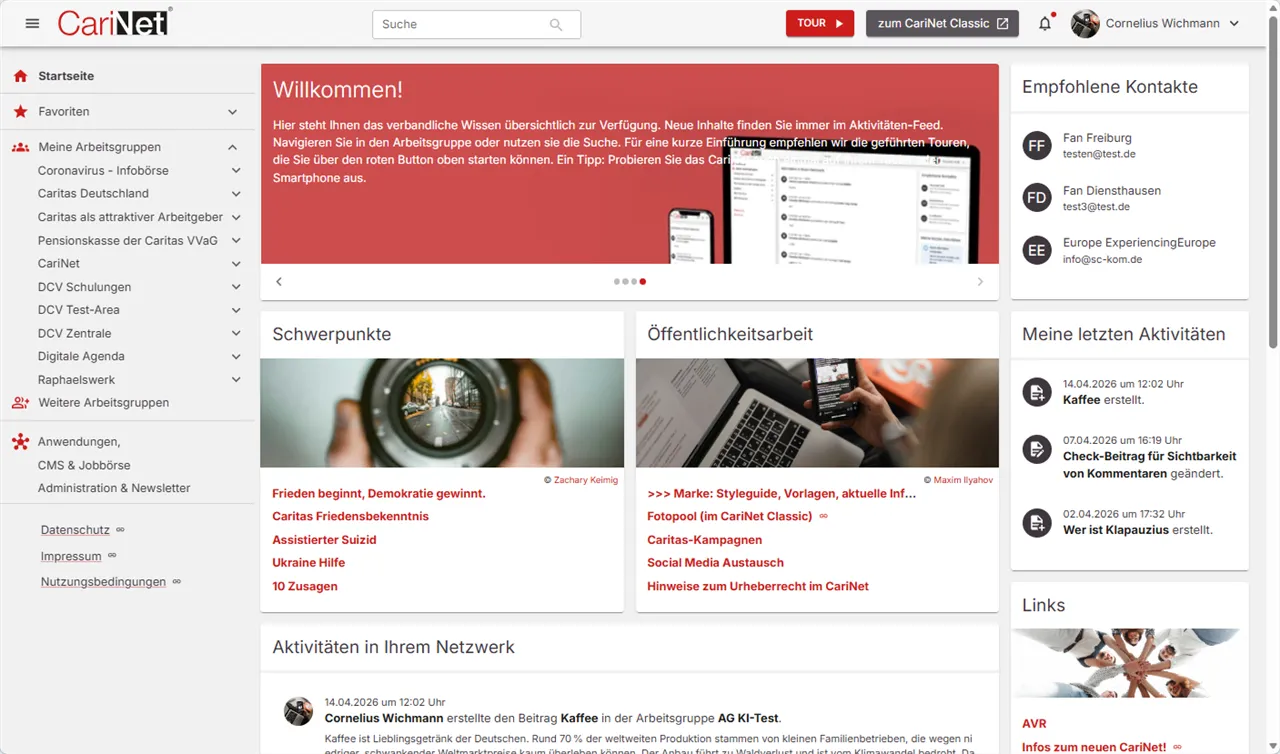
In 2022, we interviewed the team at Caritas, one of Germany’s largest welfare organizations, to discuss their ambitious project of rebuilding their legacy system using react-admin. At the time, they were just beginning to roll out CariNet, a modern, mobile-friendly intranet designed to replace their 20-year-old system.
We caught up with Cornelius Wichmann, Product Owner of CariNet at Caritas, to see how CariNet has evolved since.
Where Does the Project Stand Today?
Replacing a legacy system that’s accumulated features for 20 years isn’t something you can do overnight. So we decided to go for a step-by-step transition instead.
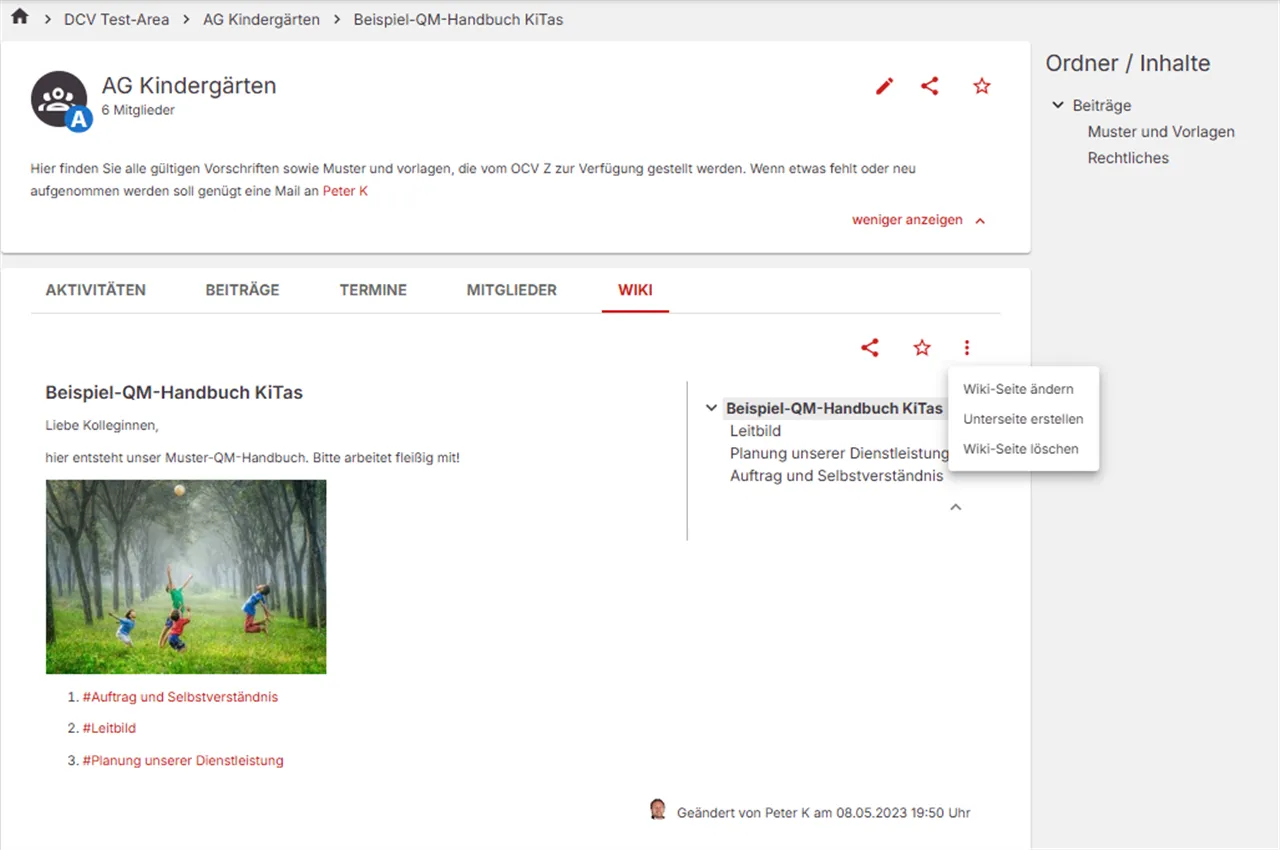
The first step was building out everything for our standard users: the people who read content, check updates, download documents. Those users represent the vast majority of our 65,000 users. We also decided to add new features that didn’t exist in the old system, like a wiki, which helped motivate more people to do the switch. That phase wrapped up about a year ago.
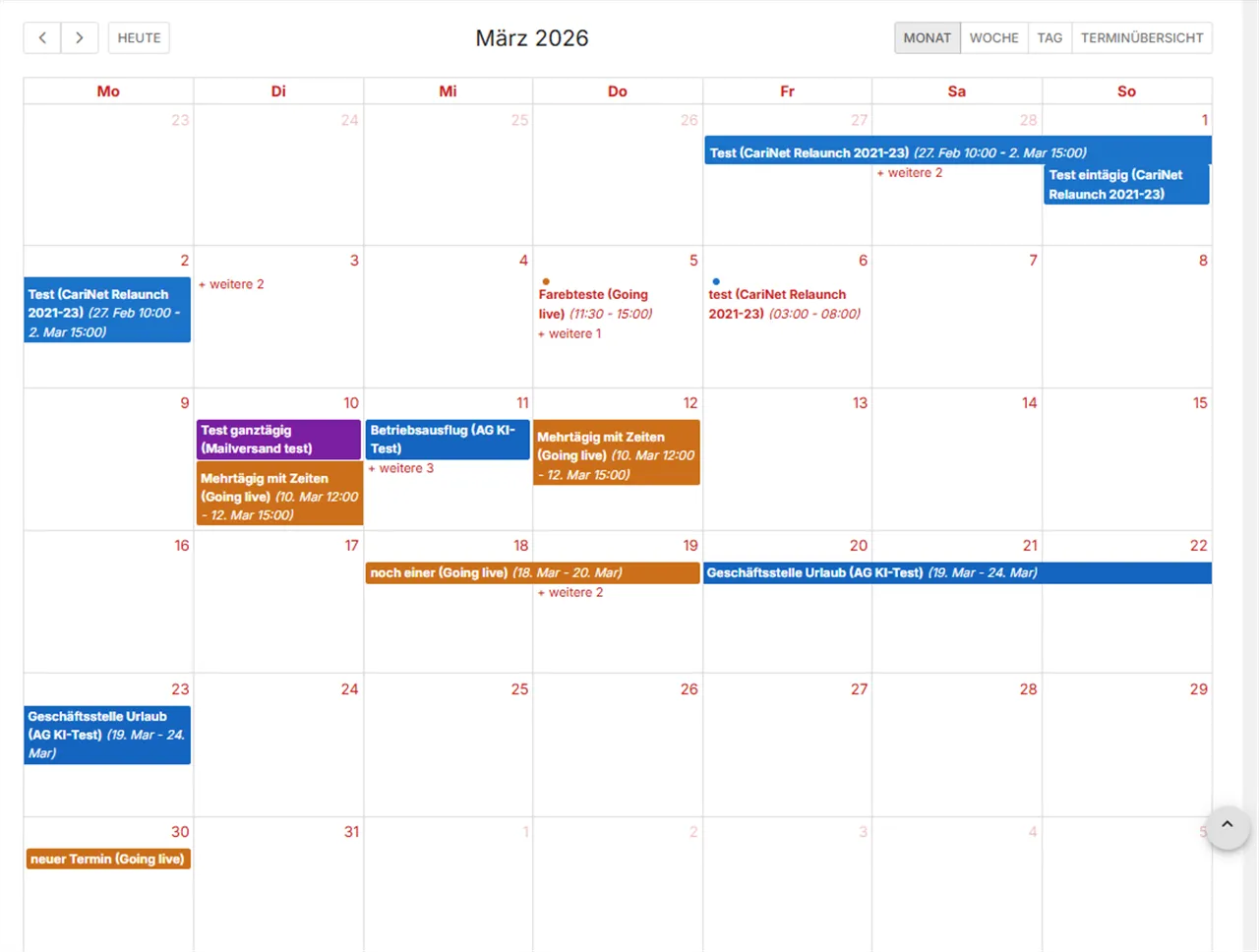
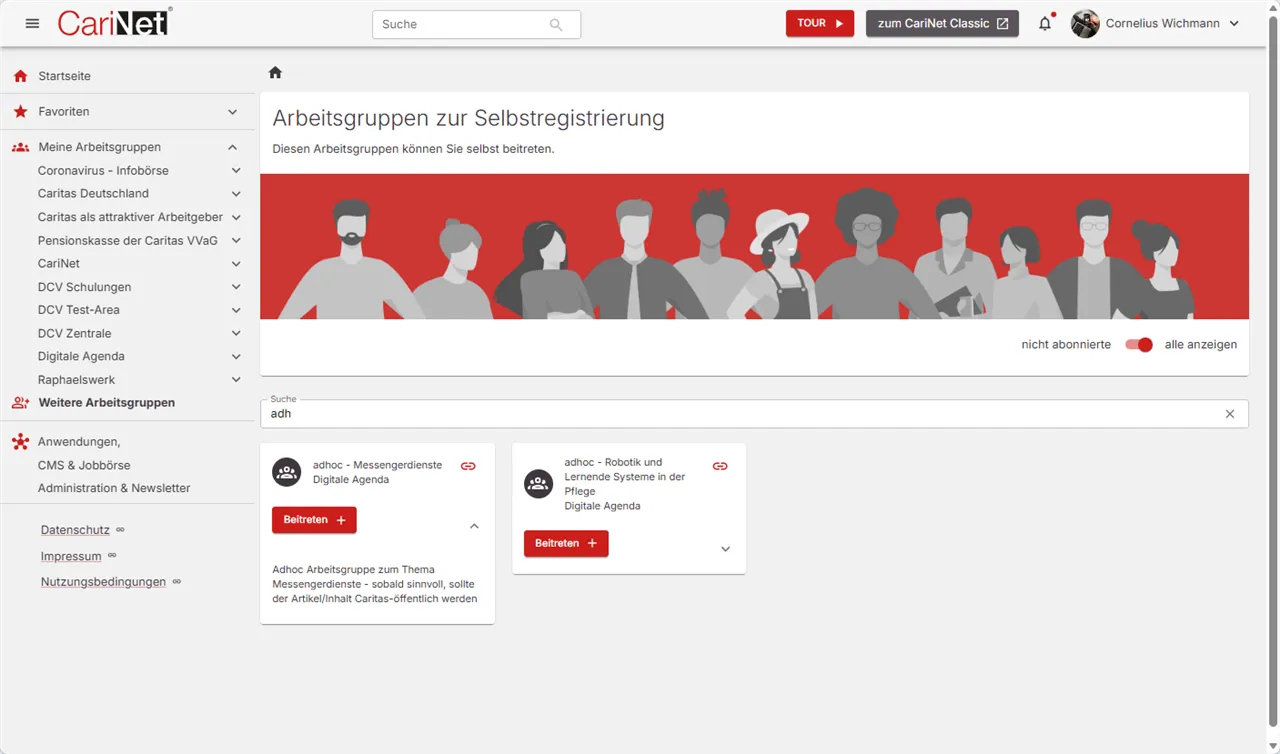
From there, we started to turn CariNet more into a hub. The idea is simple: one entry point where users can also access other tools, like our newsletter and statistical tools, all in one place. What’s left now are all the smaller admin functionalities that are still sitting in the legacy system.
Did React-Admin Help You Make CariNet More Mobile- and User-Friendly?
Yes, absolutely. React-admin helped a lot because it is built on a solid, clean UI foundation. On top of that, it includes several features that enhance the mobile experience, such as infinite scrolling.
How Has React-Admin Been Holding Up With 65,000 Users?
Very well. Handling the load is obviously primarily a backend concern, but react-admin also contributes significantly on the frontend side.
One of the things we value most is that the Data Provider is built on TanStack Query. Caching and all the related concerns work great out of the box, and they’re configurable. We use that extensively. For data that I know changes rarely, like a user’s profile picture, I cache it for a long time. Overall, the system feels significantly faster than the old one, even though they’re hitting the same database, which proves that react-admin helps with that perceived performance.
What Feedback Have You Received From Your Users?
User feedback is very important to us, which is why we even set up a dedicated workgroup inside CariNet. It’s open to anyone across Germany who’s interested in how the tool evolves. We run regular review sessions there, share release notes, and collect feedback directly.
The response has been overwhelmingly positive, and the numbers back that up: adoption keeps growing, and users are genuinely engaging with the new system. React-admin plays a big part in that.
What Impact Has React-Admin Had on Your Productivity?
To be completely transparent, I don’t come from a computer science background. I moved into software development after years in other roles at Caritas. But that’s exactly where react-admin shines: it’s well-structured enough that even someone with “average” coding skills can build real, production-quality features quickly.
Are You Integrating AI Into Your React-Admin Dashboards?
Yes, we’re actually just in the process of doing that. We have identified quite a list of interesting use cases, such as AI-assisted editor actions and a chat assistant. We also see strong potential for future use cases, such as summarizing uploaded PDFs automatically or helping users rewrite content into simpler language.
We already have a proof of concept, and we expect to roll it out soon.
Are You Using React-Admin Together With AI Agents for Development?
Oh yes, absolutely. I work in VS Code with OpenCode (a tool similar to Claude Code) and we have a Claude subscription connected to it. I’ve also integrated the Context7 MCP server, which gives the AI agent direct access to the react-admin documentation. So when I’m building new features, the agent already knows the framework. It’s become a standard part of our workflow and has significantly improved our productivity.

Cornelius Wichmann,
Product Owner of CariNet at Caritas
Have There Been Additional Projects Using React-Admin Beyond CariNet?
Yes, in fact we’ve built two smaller internal administration tools with react-admin. One of them is the management interface for our new Identity Management system. The entire admin UI for that system is built with react-admin, and honestly, that’s where the framework feels really at home since it’s a classic administration interface.
We’ve also been thinking about using react-admin for our CMS. It already has an API, so we could run it headless and put a react-admin frontend on top. We’ve done that partially for some administrative features, and it’s worked well.
What’s on Caritas’s Roadmap?
The AI features are the immediate priority, which includes getting the AI toolbox and the RAG-powered chat assistant into production. Beyond that, we’re building out the hub concept, integrating our newsletter tool, statistics platform, and other systems into CariNet. The Identity Management migration is a major infrastructure project that will simplify onboarding for all 13,000 associations. And we want to explore RBAC.
If I had more time, I’d love to experiment with Next.js and react-admin as well. We find the technology genuinely exciting. But we’re a small team with many legacy products, so we have to pick our battles.
Would You Still Recommend React-Admin in 2026?
Without hesitation. We’ve never regretted the decision. The simplicity, the agility, the fact that it keeps evolving, it all still holds true. And I want to say: Marmelab has been a fantastic partner for us. We’ve been very happy with everything, be it the features they built for us, the support and the responsiveness. When we need to build a frontend that talks to an API, react-admin is our first choice. That hasn’t changed, and I don’t see it changing anytime soon.
Conclusion
For us at Marmelab, it’s always a joy to see react-admin powering real-world applications in production. CariNet is a prime example of how far you can push react-admin: well beyond a simple admin dashboard into a full-scale platform serving tens of thousands of users.
This case also highlights something important: even in the age of AI coding agents, frameworks remain highly relevant. React-admin, combined with tools like Context7, gives agents the structured context they need to be truly effective.
We’re excited to keep following what Caritas builds next. For more real-world use cases of react-admin, check out our demo gallery.

Authors
Marketing Manager, Caroline works to increase the visibility of Marmelab and the products we publish, especially react-admin and Atomic CRM. She has many talents: avoid challenging her at foosball!